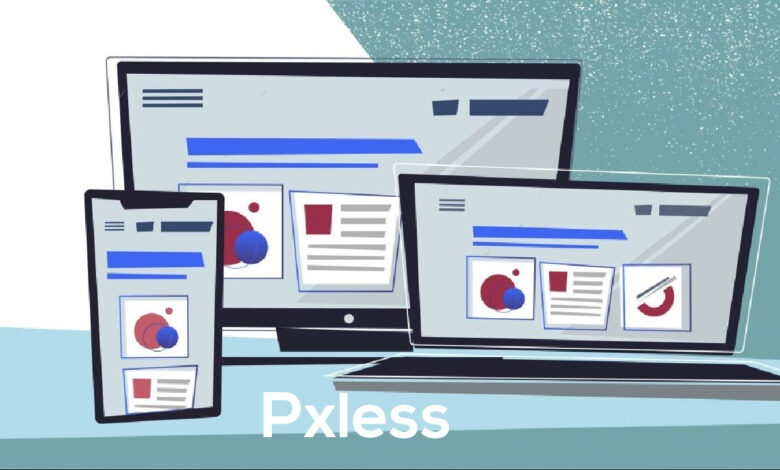
Introduction to Pxless
Pxless is a modern web design approach that moves beyond traditional fixed pixel (px) measurements and focuses on flexible, scalable layout systems that automatically adapt to different screen sizes and devices. In the past, websites were built using exact pixel values to define widths, heights, spacing, and font sizes, which worked well when most users accessed the internet on desktop computers.
However, with the rapid growth of smartphones, tablets, smart TVs, and other digital devices, fixed pixel layouts often break, overflow, or look inconsistent across screens. Pxless solves this problem by using responsive units such as percentages, rem, em, and viewport-based measurements that adjust naturally based on screen size and user settings.
This shift improves usability, accessibility, and performance while supporting mobile-first design and modern SEO standards. By reducing rigid layout structures and embracing fluid design systems, Pxless creates websites that are more adaptable, easier to maintain, and better suited for today’s multi-device digital environment.
What Is Pxless?
Pxless is a modern web design philosophy that eliminates fixed pixel (px) units and replaces them with scalable, responsive measurement systems like percentages (%), rem, em, viewport width (vw), viewport height (vh), and flexible grid units such as fr in CSS Grid. Instead of defining elements using rigid pixel values that remain constant across all screens, Pxless encourages fluid layouts that adapt naturally to different devices, screen sizes, and resolutions.
This approach moves away from rigid layouts that depend on exact pixel measurements and instead focuses on adaptability. Pxless supports multi-device ecosystems by ensuring that layouts scale proportionally rather than breaking under screen changes. Whether a user accesses a website on a mobile phone, tablet, desktop, or smart TV, the experience remains consistent, readable, and usable.
In simple terms, Pxless means designing websites that adjust naturally to any screen size without breaking. It is about building flexible digital systems that respond intelligently to their environment rather than forcing content into fixed containers.
The Meaning Behind the Word “Pxless”
Linguistic Breakdown of Pxless
The word Pxless combines two simple elements: “Px” and “less.” Px refers to pixels, which are fixed units commonly used in digital design to define exact measurements for elements. Less means without. When combined, Pxless literally means “without pixels” or more accurately “without fixed pixel dependency.” The term itself immediately communicates a break from rigid measurement systems and signals a move toward fluid scalability.
Conceptual Meaning of Pxless
Beyond its literal meaning, Pxless represents freedom from rigid measurement. It embodies an adaptive design mindset that values flexibility over strict control. Rather than designing for one perfect screen size, Pxless embraces the idea that screens will continue to evolve. Fluid scalability becomes the foundation of the system. In this sense, Pxless is not anti-structure; instead, it promotes intentional flexibility that adapts without losing consistency.
Why Pxless Works as a Brand Name
From a branding perspective, Pxless is minimal, memorable, and tech-forward. It feels modern and abstract while still hinting at its technical roots. Abstract names perform well in digital branding because they allow flexibility across industries. Pxless can represent a design framework, a SaaS tool, a digital agency, or even a development philosophy. Its simplicity makes it easy to recall, pronounce, and scale globally.
Why Pxless Is Important in Modern Web Design
The Explosion of Device Diversity
Modern users access digital content from desktops, laptops, smartphones, tablets, smart TVs, foldable screens, wearable devices, and even augmented reality systems. Designing for one fixed layout is no longer realistic. Pxless responds to this explosion of device diversity by creating systems that adapt fluidly instead of breaking under new screen conditions.
Problems With Fixed Pixel Layouts
Fixed pixel layouts often break on smaller screens, causing content overflow and distorted layouts. They create accessibility issues because text does not scale properly for users who adjust zoom levels. Maintenance becomes complex because developers must constantly rewrite styles for different screen sizes. Poor scaling also leads to inconsistent visual experiences across devices, reducing trust and usability.
Performance and SEO Benefits
Pxless supports faster rendering because flexible layouts reduce unnecessary layout recalculations. It helps minimize Cumulative Layout Shift (CLS), a key Core Web Vitals metric. Better responsiveness improves mobile ranking, as Google prioritizes mobile-first indexing. By enhancing performance and usability, Pxless indirectly strengthens SEO performance.
Core Principles of Pxless Design
1. Fluid Layouts
Pxless design uses percentages and flexible containers instead of fixed widths. For example, instead of defining a container as 1200px wide, a Pxless system might define it as 90% of the viewport width. This ensures proportional scaling across devices.
2. Relative Units Instead of Pixels
Pxless replaces px with scalable units like rem, em, %, vw, vh, and fr units in CSS Grid. These units adjust dynamically based on screen size or parent container dimensions, creating flexible systems that maintain visual harmony.
3. Responsive Typography
Typography becomes scalable and accessible using rem or em units. Users can zoom in without breaking layout structure, improving readability and accessibility compliance.
4. Content-First Design
Pxless encourages designing around content rather than forcing content into fixed boxes. Layout adapts to information flow instead of restricting it.
5. Intentional Flexibility
Flexibility does not mean chaos. Pxless requires clear spacing systems, scalable design tokens, and structured layout rules to maintain visual consistency.
Pxless vs Pixel-Based Design
| Feature | Pixel-Based Design | Pxless Design |
|---|---|---|
| Layout | Fixed | Fluid |
| Scalability | Limited | High |
| Mobile Adaptation | Heavy media queries | Naturally adaptive |
| Accessibility | Restricted | Scalable |
| Maintenance | Complex | Flexible |
| Future-proofing | Low | High |
How Pxless Improves User Experience (UX)
Better Readability
Pxless improves readability by allowing text and layout elements to scale naturally according to the screen size and user settings instead of being locked into fixed pixel values. When designers use scalable units like rem and em instead of px, fonts adjust proportionally based on the root font size or parent container, which makes content easier to read on small mobile screens and large desktop monitors alike. This flexibility also supports browser zoom and user accessibility preferences, ensuring that users who increase text size for comfort do not break the layout. As a result, headings remain balanced, paragraphs maintain proper spacing, and line lengths stay comfortable for reading. Over time, this consistent readability reduces eye strain, increases time spent on the website, and builds trust because the interface feels stable and well-structured across all devices.
Improved Accessibility
Accessibility is a core advantage of Pxless design because flexible measurement systems allow users to customize their viewing experience without damaging the layout. When websites rely heavily on fixed pixel dimensions, increasing text size or zooming in can cause overlapping elements or hidden content. Pxless avoids this issue by using scalable units that adapt to user preferences. This is especially important for people with visual impairments or those who rely on assistive technologies. Additionally, flexible layouts ensure buttons remain touch-friendly on smaller screens and interactive elements maintain appropriate spacing, improving usability for users with motor challenges. By supporting accessibility standards and user scaling behaviors, Pxless helps create inclusive digital environments that work for everyone, regardless of device or physical ability.
Reduced Frustration
User frustration often happens when layouts break, images overflow, text gets cut off, or buttons become too small to tap easily. Pxless reduces these problems by creating adaptive systems that respond intelligently to screen changes. Instead of forcing content into fixed containers, Pxless allows elements to rearrange and resize smoothly. This prevents common issues such as horizontal scrolling on mobile devices or uneven spacing on tablets. When users experience stable layouts and predictable behavior, they feel more comfortable navigating the site. Reduced frustration leads to better engagement, lower bounce rates, and higher satisfaction levels, which are critical factors for both user retention and search engine performance.
Emotional Design Impact
Beyond technical performance, Pxless also improves the emotional experience of users. A fluid, responsive interface feels modern, smooth, and professional. When layouts adjust seamlessly without visual glitches, users subconsciously associate the brand with quality and reliability. Clean scaling, consistent spacing, and adaptive design create a sense of harmony that strengthens brand perception. In contrast, rigid or broken layouts can create doubt and reduce credibility. By delivering a stable and visually balanced experience across devices, Pxless enhances the emotional connection between users and digital products, which plays an important role in building long-term loyalty and trust.
How to Implement Pxless in Web Development
Step 1 – Stop Using Fixed px for Layout
The first step in implementing Pxless is to reduce or eliminate the use of fixed pixel values for main layout structures such as containers, columns, and large spacing elements. Fixed px widths can cause layouts to break on smaller screens or appear too narrow on larger ones. Instead of defining a container as a fixed number of pixels, developers should use percentage-based widths or flexible units that scale automatically. However, it is important to understand that px is not completely forbidden. Small details such as thin borders, subtle shadows, or fine graphical adjustments can still use pixels because they require precise control. The key is avoiding pixel dependency in structural layout decisions.
Step 2 – Use rem for Typography
Typography plays a major role in readability and accessibility, so using rem units instead of px for font sizes is essential in a Pxless system. The rem unit is relative to the root font size of the document, which makes scaling predictable and consistent. When the base font size changes, all rem-based text adjusts proportionally. This approach simplifies responsive typography and ensures headings, subheadings, and body text remain visually balanced across devices. It also supports browser zoom functionality and accessibility settings without causing layout distortion.
Step 3 – Use % for Containers
Using percentages for containers allows elements to adjust automatically based on their parent element or viewport width. For example, setting a container to 90% width instead of a fixed pixel value allows it to expand or shrink according to the screen size. This approach creates fluid layouts that maintain proportional spacing and alignment. Percentage-based containers are especially useful for responsive grids and content sections, ensuring that content remains centered and visually consistent without relying on fixed breakpoints.
Step 4 – Use vw/vh Carefully
Viewport width (vw) and viewport height (vh) units are powerful tools in Pxless design because they are directly tied to the size of the browser window. For example, 50vw means 50% of the viewport width. These units are helpful for creating dynamic hero sections or full-screen layouts. However, they should be used carefully because excessive reliance on viewport units can cause scaling issues on extremely large or small screens. When applied strategically, vw and vh enhance responsiveness and visual impact without compromising usability.
Step 5 – Use Flexbox
Flexbox is a layout system designed to distribute space efficiently within a container. It allows elements to grow, shrink, or rearrange automatically depending on available space. In a Pxless design, Flexbox helps maintain alignment and spacing without fixed measurements. For example, navigation menus can adjust from horizontal layouts on desktop screens to vertical stacks on mobile devices without rewriting major layout code. Flexbox simplifies responsive behavior and reduces the need for complex positioning rules.
Step 6 – Use CSS Grid
CSS Grid provides a powerful two-dimensional layout system that works well with scalable units like fr (fractional units). The fr unit distributes available space proportionally across columns and rows, making layouts more flexible. With CSS Grid, developers can define flexible columns that automatically adjust based on screen width. This makes it easier to build complex layouts without fixed pixel constraints. Combined with relative units, CSS Grid forms a strong foundation for Pxless architecture.
Step 7 – Apply Media Queries Strategically
Although Pxless emphasizes flexible layouts, media queries still play an important role in refining the design for specific breakpoints. Media queries allow developers to adjust spacing, font sizes, or layout structure when screens reach certain widths. However, instead of relying heavily on multiple pixel-based breakpoints, Pxless encourages minimal and strategic use of media queries to enhance responsiveness rather than fix broken layouts. This balanced approach ensures adaptability while maintaining clean and maintainable code.
Pxless in Mobile Development
Pxless plays a very important role in modern mobile development because mobile devices come in many different screen sizes, resolutions, and aspect ratios. Smartphones range from small compact screens to large foldable displays, and fixed pixel layouts often fail to adapt properly across these variations. Pxless solves this issue by using scalable units and flexible layouts that automatically adjust to screen width and height. This ensures that buttons remain easy to tap, text remains readable, and images scale proportionally without distortion. In mobile apps, Pxless reduces the need to design multiple versions of the same interface for different devices, which saves development time and cost. It also improves performance because adaptive layouts require fewer layout recalculations and reduce unnecessary rendering complexity. By using flexible UI components and responsive grid systems, Pxless helps mobile applications remain consistent, accessible, and visually stable across all devices, which directly improves user satisfaction and retention.
Pxless in Product and SaaS Design
In product design and SaaS platforms, Pxless supports scalable design systems that grow with the product. SaaS dashboards often contain complex components such as data tables, analytics charts, navigation panels, and interactive widgets. If these elements rely on fixed pixel widths, they may break when new features are added or when viewed on different screen sizes. Pxless encourages modular UI systems built with flexible grids and scalable measurement units, which makes it easier to expand the product without redesigning the entire interface. Design tokens, component libraries, and reusable UI patterns become more efficient when they are based on relative units instead of fixed values. This flexibility improves long-term maintainability and allows product teams to iterate quickly. As SaaS products continue to evolve with new integrations and features, Pxless ensures that layouts remain adaptable, visually balanced, and performance-friendly.
Pxless as a Branding Concept
Pxless is not only a technical concept; it also works strongly as a branding idea. The name itself feels modern, minimal, and technology-focused. In digital branding, short and abstract names often perform better because they are easy to remember and flexible enough to expand across industries. Pxless communicates innovation, adaptability, and forward-thinking design without being limited to one specific product type. Startups, design agencies, or tech platforms can adopt the name Pxless to represent scalability and digital intelligence. The idea of “pixel-free” design also aligns with the broader trend of simplification and flexibility in technology. As businesses increasingly prioritize mobile-first experiences and responsive systems, Pxless becomes a symbolic representation of future-ready digital thinking.
Technical Deep Dive: Pxless Architecture
Technically, Pxless architecture is built on modern CSS and layout systems that replace fixed pixel structures with flexible logic. One of the foundations of Pxless architecture is the use of CSS custom properties, also known as variables, which allow scalable design tokens for spacing, typography, and color systems. Instead of hardcoding values, developers define adaptable rules that scale consistently across components. Fluid grid systems using CSS Grid and fractional (fr) units distribute space proportionally without relying on fixed widths. Flexbox ensures dynamic alignment and spacing within containers. Container queries, which allow components to adapt based on their parent container size instead of only viewport size, represent a major advancement in Pxless implementation. Together, these technologies create scalable systems that respond intelligently to different environments while maintaining structural consistency and performance stability.
Common Mistakes When Applying Pxless
While Pxless offers many benefits, improper implementation can create new challenges. One common mistake is removing structure entirely in the name of flexibility. Pxless does not mean abandoning layout rules; it means designing structured systems that scale intelligently. Another mistake is overusing viewport units like vw and vh, which can create extreme scaling problems on very large or very small screens. Ignoring accessibility guidelines is another critical error, as flexible layouts must still respect readable line lengths and touch-friendly spacing. Some developers also replace pixels blindly without understanding relative measurement systems, which can lead to inconsistent spacing or unpredictable behavior. Successful Pxless implementation requires balance, planning, and disciplined design systems rather than uncontrolled flexibility.
Is Pxless Only for Web Design?
Pxless is not limited to traditional websites. Although it is most commonly associated with web development, its principles apply to mobile apps, SaaS dashboards, digital products, smart devices, and even emerging technologies like wearable interfaces and AR systems. Any digital interface that must function across different screen sizes benefits from scalable layout logic. For example, smart home dashboards displayed on tablets or wall-mounted screens require flexible systems to maintain usability. Enterprise software used across desktops and laptops also benefits from Pxless adaptability. As digital ecosystems expand beyond simple web pages, Pxless becomes increasingly relevant across all digital platforms.
Future of Pxless (2026–2030 Predictions)
The future of Pxless aligns closely with the evolution of adaptive digital systems and artificial intelligence-driven interfaces. As user expectations grow, static layouts will become less acceptable, and intelligent design systems will dominate.
AI-Adaptive Layouts
Artificial intelligence may automatically adjust layout structure based on user behavior. For example, frequently used features could become more prominent, while rarely used elements could reduce visual weight. AI systems could analyze screen size, interaction patterns, and performance data to optimize layout in real time. Pxless architecture provides the flexibility needed for such adaptive systems to function effectively.
Smart Context-Based UI
Future interfaces may adapt based on environmental conditions such as screen brightness, orientation, device type, or user preferences. Context-aware systems could change layout density, spacing, or typography automatically. Pxless design principles allow these adjustments to happen smoothly without breaking structural integrity.
Voice and AR Integration
As voice interfaces and augmented reality environments grow, rigid pixel-based systems will become outdated. Flexible layout systems are essential for immersive digital experiences where screen dimensions are not fixed. Pxless supports scalable UI elements that can adapt to 3D environments, overlays, and voice-driven interactions.
Fluid Design Systems as Standard
Design tokens, container queries, and fluid grid systems are expected to become standard practice. Pixel-free systems may eventually replace fixed pixel-based design as the default method for modern development. As these technologies mature, Pxless will no longer be optional but a foundational approach.
Pros and Cons of Pxless
Advantages
Pxless offers flexibility, accessibility, improved performance, scalability, and future-proof architecture. It allows systems to grow without constant redesign. It improves mobile responsiveness and supports accessibility standards. It reduces layout instability and enhances user experience. These advantages make Pxless a powerful solution for long-term digital strategy.
Limitations
Despite its strengths, Pxless comes with a learning curve. Developers accustomed to fixed pixel systems must adjust their mindset and workflow. Converting legacy pixel-heavy projects into Pxless systems can be time-consuming. It also requires disciplined implementation and strong design guidelines to avoid inconsistency. Without proper planning, flexible systems can become unpredictable.
Final Verdict
Yes, if you care about scalability, mobile-first development, accessibility, performance, and long-term future-proofing, Pxless is the right approach. It is not just a temporary trend but a natural evolution in digital design. As devices continue to diversify and user expectations increase, rigid pixel-dependent systems will struggle to remain effective. Pxless represents adaptability, intelligent responsiveness, and modern digital thinking. For businesses, developers, and designers aiming to build resilient and future-ready digital products, adopting Pxless in 2026 and beyond is a strategic and practical decision.
FAQs
1. What is Pxless in simple words?
Pxless is a modern web design approach that avoids fixed pixel (px) measurements and uses flexible units like percentages, rem, and viewport units instead. This allows websites to automatically adjust to different screen sizes without breaking. In simple terms, Pxless means creating websites that look good and work smoothly on mobile, tablet, and desktop devices.
2. What does Pxless mean in web design?
In web design, Pxless means designing layouts without depending on fixed pixel values. Instead of setting exact pixel widths and heights, designers use scalable units so the layout adapts naturally to different devices. This makes websites more responsive, accessible, and future-proof.
3. Is Pxless better than pixel-based design?
Yes, Pxless is generally better for modern websites because it supports responsive design and works well across all devices. Pixel-based design can break on smaller screens, while Pxless layouts scale automatically. This improves user experience, accessibility, and even SEO performance.
4. Does Pxless mean you should never use pixels?
No, Pxless does not mean you must completely remove pixels. Small details like thin borders or shadows can still use pixel values. However, for main layout structures such as containers, typography, and spacing, scalable units are recommended to keep the design flexible.
5. Why is Pxless important for SEO and Google ranking?
Pxless improves mobile responsiveness, reduces layout shifts, and enhances page speed. These factors are important for Google’s ranking system, especially with mobile-first indexing. A Pxless website provides a better user experience, which can lead to higher engagement and lower bounce rates — both important for ranking on Google’s first page.