Introduction
Piçada is a word that generates curiosity because it carries more than one possible meaning depending on context, region, and spelling. In colloquial Portuguese, Piçada most commonly refers to a sharp reprimand or scolding delivered in an informal setting. However, many people confuse it with “picada,” a similar-looking word used in Spanish and Catalan to describe food dishes or rural trails. This confusion is one of the main reasons why users search for Piçada online, often typing queries such as “piça da significado,” “piçada em português,” or “piça da comida ou gíria.”
Piçada is an informal Portuguese term commonly used to describe a sharp reprimand or dressing-down. However, it is often confused with “pica da,” a culinary or geographic term in Spanish and Catalan. Understanding the difference is essential for accurate usage.
The cultural and linguistic importance of Piça da lies in its flexibility. It appears in spoken Portuguese, in regional dialects, and occasionally in digital conversations. Its meaning can shift slightly depending on tone and region, which makes it both interesting and complex. In this article, you will find a complete explanation of what Piçada means, how it is used in Portugal and Brazil, how it differs from pica da, and why it continues to attract search interest today.
What Does Piçada Mean?
Official Dictionary Meaning of Piçada
According to European Portuguese dictionaries, Piçada is categorized as an informal or colloquial noun that refers to a reprimand, dressing-down, or verbal rebuke. In simple terms, when someone says, “Levei uma piça da,” it means “I got scolded.” The tone usually suggests that the reprimand was sharp, direct, and possibly embarrassing. This definition places Piçada firmly within spoken language rather than formal writing.
Most authoritative lexicons classify Piçada as slang or informal vocabulary. It is not commonly used in academic, legal, or official documents. Instead, it appears in conversations, storytelling, and casual dialogue. The strength of the word depends on tone. In some cases, it implies a serious correction from a superior; in other cases, it may simply describe a strong verbal warning. The core idea remains consistent: Piça da is a forceful verbal correction delivered to someone who has made a mistake.
Informal and Vulgar Extensions of Piçada
In certain contexts, Piçada may carry additional meanings that are more vulgar or sensitive. Some informal dictionaries note that the term can have sexual or ribald connotations depending on usage and region. Because of this, context becomes extremely important. While the standard meaning refers to a reprimand, some slang environments may reinterpret the word differently.
For this reason, Piçada is generally not recommended for formal writing or professional communication. It belongs to colloquial speech, where tone, facial expression, and the relationship between speakers clarify intent. Anyone using the word should be aware that it may sound inappropriate in formal or international settings. Understanding these nuances is key to using Piça da correctly and responsibly.
Regional Usage of Piçada
Piçada in Portugal
In Portugal, Piçada is most commonly understood as a verbal scolding. It appears frequently in spoken Portuguese and is used in family conversations, workplace discussions, and even comedic dialogue. Parents may give children a Piça da for misbehaving, and supervisors might deliver a Piça da to employees who made errors. Comparable Portuguese words include “ralhete,” “bronca,” and “raspanete,” all of which describe some form of reprimand.
The word carries emotional intensity but does not always imply cruelty. In many cases, it suggests authority and discipline rather than hostility. In comedy, Piçada can be exaggerated for humorous effect, especially in television sketches or storytelling. Because it is embedded in everyday speech, most Portuguese speakers immediately understand its tone and social meaning.
Piçada in Brazil
In Brazil, the word Piçada is less common than in Portugal, but it does exist in certain regions and slang communities. Brazilian Portuguese tends to evolve differently from European Portuguese, and meanings may shift slightly. In some urban settings, Piça da may resemble a sarcastic jab, playful correction, or ironic tease rather than a strict reprimand.
Brazil’s linguistic diversity means usage varies from state to state. Some regions may barely use the term, while others incorporate it into local slang. Migration, media influence, and cultural exchange all contribute to how Piçada is understood. Therefore, context and location play a crucial role when interpreting the word in Brazil.
Piçada in Other Portuguese-Speaking Regions
Outside Portugal and Brazil, Piçada has limited documentation. In countries like Angola or Mozambique, local dialects and African linguistic influences shape vocabulary differently. While the word may be recognized due to shared Portuguese heritage, its usage is not as prominent. Dialect contact and migration sometimes introduce vocabulary changes, but Piça da remains strongest in Iberian Portuguese contexts.
Everyday Usage and Social Function of Piça da
Piçada as Social Correction
One of the most important social roles of Piçada is correction. The word functions as a compact way to describe discipline. Instead of explaining a long argument or lecture, someone can simply say they received a Piçada. This efficiency reflects the emotional economy of language, where one word captures an entire event.
A Piçada may come from a parent, teacher, military superior, or manager. It signals that a mistake occurred and authority responded. The word communicates both the action and the emotional impact of that correction. Because of its directness, it is especially effective in spoken conversation.
Humor and Irony in Piçada
Not all Piçadas are severe. In many cases, the word can be affectionate or humorous. Friends may give each other a light Piçada as playful teasing. The tone often determines whether the meaning is serious or joking. Portuguese culture frequently blends humor and correction, making the word versatile in social settings.
Piçada in Modern Conversation
Today, Piçada appears more in speech than in writing, but it also shows up on social media, in comments, and in online banter. Digital communication has amplified informal expressions, allowing slang terms to spread quickly. When used online, Piçada may describe a viral “call-out” moment or a sharp criticism posted publicly.
Piçada and Geographic Meaning (Trail Confusion)
Relation to “Picada” as Trail
One of the biggest reasons people misunderstand Piçada is its visual and phonetic similarity to the word pica da, spelled without the cedilla (ç). In Spanish and Portuguese, pica da often refers to a narrow path or trail, especially one that has been cut through forest vegetation. This meaning is common in rural areas across Latin America and parts of the Iberian Peninsula. Historically, settlers, farmers, and explorers would “open a pica da” by cutting through dense vegetation to create a walkable route. Over time, the word became associated with these rustic, handmade trails that connect farms, villages, and forest regions.
In Brazil, the term picada is frequently used in agricultural and rural contexts. It describes small dirt paths between plantations, wooded areas, or mountainous terrain. These paths are usually not paved roads but natural trails shaped by human movement and environmental conditions. Because the pronunciation of Piça da and pica da is very similar in everyday speech, especially for non-native speakers, confusion easily arises. However, the trail meaning belongs to pica da, not Piça da in its slang sense.
Toponyms and Place Names
Across Brazil, Argentina, Uruguay, and other countries influenced by Portuguese and Spanish, you will find geographic locations that include the word picada. These may be rural communities, hiking trails, or farmland routes. In some cases, place names may look like “Pica da Grande” or “Picada Velha,” indicating a large or old trail. These names preserve historical references to early settlement routes and agricultural expansion.
It is important to understand that these place names relate to the geographic meaning of picada as a path or trail. They do not connect to the slang meaning of Piça da as a reprimand. The similarity in spelling sometimes leads internet users to assume a deeper relationship, but linguistically, the connection is based on shared roots rather than identical definitions. When analyzing regional maps or historical documents, spelling becomes a crucial clue in determining meaning.
Language Meets Landscape
The evolution of picada as a trail demonstrates how language grows from physical action. The verb “picar” means to cut, pierce, or sting. In a forest context, cutting through vegetation creates a path — a picada. Interestingly, this physical idea of cutting also appears metaphorically in social language. A Piça da, meaning a sharp reprimand, can be seen as a verbal “cut” or sting delivered to someone who made a mistake.
Although the trail meaning and the reprimand meaning developed in different social environments, they share a conceptual foundation: the act of cutting or striking. This overlap shows how words can travel from the physical world into abstract, emotional, and social meanings. It also explains why careful context analysis is essential when interpreting similar-looking words.
Piçada vs Picada — Critical Distinction
Spelling Differences Explained
The most important difference between Piçada and picada lies in spelling and linguistic register. Piça da, written with a cedilla (ç), is generally used in Portuguese slang to describe a reprimand, dressing-down, or sharp verbal correction. It belongs to informal spoken Portuguese and is often classified as colloquial vocabulary.
Picada, written with a standard “c,” has broader meanings in Spanish and Portuguese. It can refer to chopped ingredients in cooking, a narrow forest trail, or even a culinary dish in Catalan and Latin American cuisines. Although the two words may sound similar in speech, especially to non-native speakers, they belong to different semantic categories. The cedilla changes pronunciation slightly and signals a different lexical identity in written Portuguese.
Why People Get Confused
Online confusion happens because the words look almost identical and sometimes sound alike in casual pronunciation. Many users search phrases like “piçada comida,” “piçada ou pica da,” or “diferença entre piçada e picada.” These search queries show that people are unsure whether the word relates to food, geography, or slang.
Another reason for confusion is regional language overlap. Portuguese and Spanish share many similar words derived from Latin. As a result, search engines may show mixed results that include both culinary and slang explanations. Without clear headings and contextual explanations, readers may misunderstand the intended meaning.
How to Identify the Correct Meaning
The easiest way to identify the correct meaning is by analyzing context. If the discussion includes cooking, ingredients, shared platters, or regional dishes, the word likely refers to picada in its culinary sense. If the context involves hiking, rural areas, or forest routes, it probably refers to a picada as a trail.
However, if the situation describes someone receiving a strong verbal correction, being disciplined, or getting a dressing-down, the word is almost certainly Piçada in its slang meaning. Understanding the setting, topic, and spelling allows readers to interpret the word correctly.
By paying attention to these distinctions, you can avoid misunderstandings and ensure accurate usage. Clear spelling, cultural awareness, and context-based interpretation are the key tools for separating Piçada from picada.
Culinary Confusion — Picada in Food Culture
One of the strongest sources of confusion around Piçada comes from the culinary world, where the word picada (without the cedilla) has a completely different meaning. In Catalonia, picada is a traditional sauce base used to finish soups and stews. It is typically made by crushing garlic, toasted bread, nuts (such as almonds or hazelnuts), olive oil, and sometimes herbs or spices using a mortar and pestle. This mixture is added near the end of cooking to thicken the dish and deepen its flavor. One well-known example is suquet de peix, a Catalan fish stew that often relies on picada for its rich and aromatic finish. In this context, pica da is an essential part of regional culinary identity and has centuries of documented history in Mediterranean cooking.
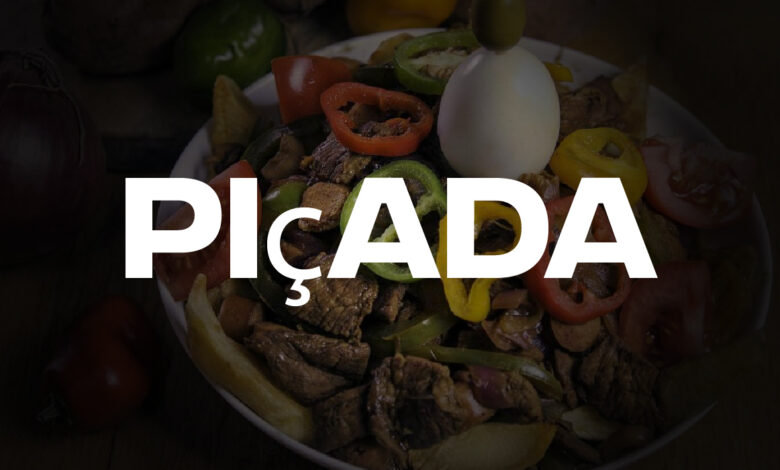
In Latin America, especially in countries like Argentina and Colombia, pica da refers to a shared appetizer platter rather than a sauce. An Argentine picada usually includes sliced cured meats, sausages, cheeses, olives, bread, and sometimes grilled items. It is commonly served during social gatherings, football matches, or family events. In Colombia, picada may include grilled meats, fried potatoes, plantains, and chorizo, presented as a large platter meant to be shared. These dishes are strongly connected to social traditions and hospitality. However, it is important to clearly state that these culinary meanings belong to pica da and are not related to the Portuguese slang term Piça da. The confusion mainly happens because the words look almost identical in writing and may sound similar when spoken quickly.
Etymology and Linguistic Roots
To understand Piçada more clearly, it helps to examine its linguistic origins. The word likely comes from the verb “picar,” which exists in both Portuguese and Spanish. The verb means to sting, prick, pierce, or chop. This root connects to actions that involve sharp or cutting movements. In Portuguese word formation, the suffix “-ada” usually indicates the result of an action or a specific instance of that action. When combined, “picar” and “-ada” create a word that suggests a sharp strike, a sudden action, or something that delivers impact.
This morphological structure explains how related words developed in different contexts. For example, picado may describe something chopped into small pieces, and picada can refer to chopped food or a narrow trail cut through vegetation. In the slang sense, Piça da evolved metaphorically to describe a sharp verbal strike, meaning a reprimand or scolding. Other related Portuguese words include “ralhete” and “raspanete,” which also describe forms of verbal correction. By understanding the root and suffix, we can see how the word expanded from physical cutting actions to emotional and social meanings.
Cultural Significance of Piçada
Piçada holds cultural importance because it reflects how authority and discipline function in Portuguese-speaking societies. In family settings, a parent might give a child a Piça da for misbehavior. Schools and teachers may deliver a Piça da to correct students. In military or workplace environments, superiors might use a Piça da to reinforce rules and expectations. The word captures the emotional intensity of correction without needing a long explanation. Its brevity makes it powerful and memorable.
At the same time, Piçada does not always imply harsh punishment. In storytelling and everyday conversation, it can be used humorously. Someone may describe a light teasing from a friend as a Piça da, even if it was not serious. This dual nature—serious yet sometimes playful—gives the word flexibility. It shows how language can reflect both structure and warmth within social relationships. Piça da demonstrates how a single word can carry layers of meaning related to authority, humor, and social bonding.
Piçada in Modern Digital Culture
In recent years, online communication has helped revive and spread many informal expressions, including Piçada. Social media platforms allow users to share experiences quickly, and slang terms often gain new life in digital conversations. People may say they “took a Piça da” after receiving strong criticism in a comment section or during an online debate. In this environment, the word adapts to describe public or virtual reprimands.
Younger generations sometimes reinterpret Piçada as playful “verbal shade,” especially in meme culture or casual messaging. Digital communities often reshape language, giving traditional slang new tones and meanings. While the core definition of Piça da as a reprimand remains stable, online usage can soften or exaggerate its impact. This evolution shows how language continuously adapts to new communication platforms while preserving its historical roots.
Conclusion
Piçada is primarily an informal Portuguese word that describes a sharp reprimand or dressing-down. Although it may carry humorous or regional variations, its main meaning remains connected to verbal correction and social discipline. Much confusion arises because of its similarity to pica da, a culinary or geographic term in Spanish and Catalan that refers to sauce bases, appetizer platters, or forest trails. By carefully examining spelling, context, and cultural background, readers can clearly distinguish between these meanings.
Ultimately, Piçada is a small but expressive word that highlights how language connects physical action, social correction, humor, and cultural identity. Its evolution from a root meaning “to sting or cut” into a metaphor for verbal impact demonstrates the dynamic nature of language. Understanding Piça da requires attention to detail, awareness of regional differences, and respect for linguistic nuance.
Frequently Asked Questions (FAQs)
1. What does Piçada mean in Portuguese?
Piçada is an informal Portuguese word that means a sharp reprimand or scolding. It is used in everyday conversation to describe a strong verbal correction, usually given by a parent, teacher, or authority figure.
2. Is Piçada the same as Picada?
No, they are not the same. Piçada (with “ç”) usually refers to a reprimand in Portuguese slang. Pica da (with “c”) can mean chopped food, a culinary dish, or a narrow forest trail in Spanish and Portuguese. The meanings are completely different.
3. Is Piçada a bad or vulgar word?
Piçada is generally informal and used in casual speech. In some contexts, it may have stronger or vulgar meanings, depending on tone and region. It is not recommended for formal writing or professional situations.
4. Where is Piçada commonly used?
Piçada is most commonly used in Portugal in spoken language. It also appears in some Brazilian slang, although less frequently. The meaning can vary slightly depending on region and context.
5. Why do people confuse Piçada with food?
People confuse Piçada with food because of the similar spelling to pica da, which refers to dishes in Catalan, Argentine, and Colombian cuisine. The confusion happens mainly due to spelling similarity, not because the meanings are related.